
Overthinking & Decision Fatigue Therapy
When Your Mind Won’t Stop Spinning

You can analyze a situation from every possible angle and still not feel sure what to do.
You replay conversations. Second-guess decisions. Imagine every possible outcome. Wonder whether you said the wrong thing, made the wrong choice, or somehow missed something everyone else seems to understand.
And when you finally make a decision? Your brain would like to reopen the case for further investigation.
It's exhausting.
If you're an overthinker who struggles to trust your decisions, feels responsible for keeping everyone happy, or spends so much time trying to get things right that you struggle to move forward, you're not alone.
I'm Candice Coughenour, a Licensed Marriage and Family Therapist offering online therapy for adults in Pennsylvania, including those navigating overthinking, decision fatigue, anxiety, and chronic people-pleasing.
Therapy isn't about forcing yourself to stop thinking or convincing yourself to care less.
It's about understanding what's happening beneath the mental loops, reconnecting with your own experience, and learning to respond differently when your brain starts doing what it does best: trying to solve every possible problem before it happens.
Why Is It So Hard to Stop Overthinking?
There isn't one explanation that fits everyone. Overthinking can serve different purposes depending on your experiences, relationships, and circumstances.
For some people, analyzing every possibility feels like a way to prevent mistakes.
For others, replaying conversations becomes an attempt to figure out whether they've disappointed someone or put a relationship at risk.
And if you've learned to be the responsible one, the reliable one, or the person who keeps everything running smoothly, uncertainty can feel like something you have to solve before you're allowed to rest.
Over time, thinking can become a way to avoid the discomfort of not knowing.
You may understand why you do it. You may even recognize the pattern while it's happening.
But knowing what's going on doesn't automatically make the anxiety disappear or the next decision easier.
That's where therapy can help: not by giving you another thing to analyze, but by helping you understand your patterns and develop more flexibility in how you respond.
Overthinking, People-Pleasing, and the Pressure to Get It Right
Overthinking and people-pleasing often show up together.
When you're used to considering everyone else's feelings, needs, and expectations, even an ordinary decision can become surprisingly complicated.
Should you say what you really think? Will someone be disappointed? Did your message sound rude? Are you asking for too much? What if setting a boundary changes the relationship?
You may spend more energy managing possible reactions than considering what you actually want or need.
This is especially common among people who have become very good at being capable, helpful, and accommodating while losing touch with their own limits.
Part of our work may involve learning to distinguish between what you know, what you're assuming, what belongs to someone else, and what is realistically within your control.
You can consider another person's experience without taking responsibility for managing every part of it.
You can make a thoughtful decision without guaranteeing that nobody will be disappointed.
And you can learn to trust yourself without needing absolute certainty first.
How Therapy for Overthinking Can Help
My approach is relational, experiential, and systems-aware. We look at how your patterns developed, what they may be doing for you now, and what happens when they show up in your everyday life.
Rather than focusing exclusively on why you overthink, we also pay attention to what happens in the moment.
Together, we may explore:
Recognizing your patterns. Notice when analysis, reassurance-seeking, or second-guessing starts taking over, including the feelings and bodily experiences that accompany it.
Understanding what your mind is trying to manage. Explore the fears, expectations, relationship dynamics, or uncertainties that may be contributing to your need to think everything through.
Reconnecting with yourself. Practice recognizing your feelings, needs, preferences, and values instead of trying to reason your way toward the one perfectly correct answer.
Building tolerance for uncertainty. Explore ways to make decisions and take meaningful action without requiring complete certainty or reassurance first.
Changing familiar responses. Practice new ways of responding to anxiety, difficult conversations, boundaries, and everyday decisions.
Developing self-trust. Learn to make choices, reflect on the outcomes, and adjust when needed without treating every imperfect decision as evidence that you cannot trust yourself.
The goal isn't to eliminate every anxious thought.
It's to create more options for what happens when those thoughts show up.
The Congruent Soul Approach
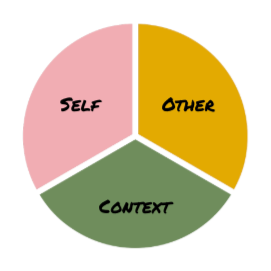
At Congruent Soul Therapy, I use the Congruent Soul Framework to consider three interconnected elements: Self, Other, and Context.
Self: What am I thinking, feeling, needing, and valuing in this situation?
Other: What do I actually know about the other person's experience, and what might I be assuming?
Context: What circumstances, expectations, and limitations are shaping what's happening?
When overthinking takes over, you may find yourself giving enormous attention to what someone else might think or what could go wrong while losing touch with your own needs and the realities of the situation.
Considering all three perspectives can help you step back, understand the bigger picture, and make a more intentional choice.
Living more congruently doesn't mean making perfect decisions. It means doing your best to align your thoughts, feelings, and actions with your core values while considering other people and the circumstances you're navigating.
Not perfectly. Just a little more intentionally.
Online Overthinking Therapy in Pennsylvania
I provide online individual therapy for adults located in Pennsylvania. Virtual sessions allow you to participate from a private, comfortable space without adding a commute to an already full day.
Therapy may be a good fit if you're ready to explore patterns of overthinking, anxiety, decision fatigue, perfectionism, or people-pleasing and want support translating insight into meaningful changes in everyday life.
You don't need to know exactly what you want to work on before we meet.
We can start with what's happening now, what feels most difficult, and what you hope might become different.
Frequently Asked Questions
Can therapy help with overthinking?
Therapy can help you understand patterns that contribute to overthinking, explore the emotions and circumstances associated with them, and practice different ways of responding. The approach depends on your experiences, goals, and needs.
Is overthinking always anxiety?
No. Overthinking can be associated with anxiety, perfectionism, uncertainty, relationship concerns, or other experiences. Understanding what contributes to your pattern is more useful than assuming every person's experience has the same cause.
What if I already understand why I overthink?
Many people who seek therapy with me are already highly self-aware. We can explore how your patterns show up in real time and practice new responses, rather than focusing only on understanding where they came from.
Can overthinking be connected to people-pleasing?
Yes, for some people. Worrying about other people's reactions, replaying conversations, and trying to prevent disappointment can all contribute to overthinking. Therapy can help you explore these patterns and develop a more balanced relationship with your own needs and other people's expectations.
Do you offer online therapy in Pennsylvania?
Yes. I offer online individual therapy to adults located in Pennsylvania, Georgia, and Florida subject to applicable professional and telehealth requirements
How do I get started?
Start with a free 15-minute Vibe Check. It's an opportunity to meet, ask questions, and decide whether working together feels like a good fit
You don't have to think your way into having all the answers before you begin.
Overthinking Resources
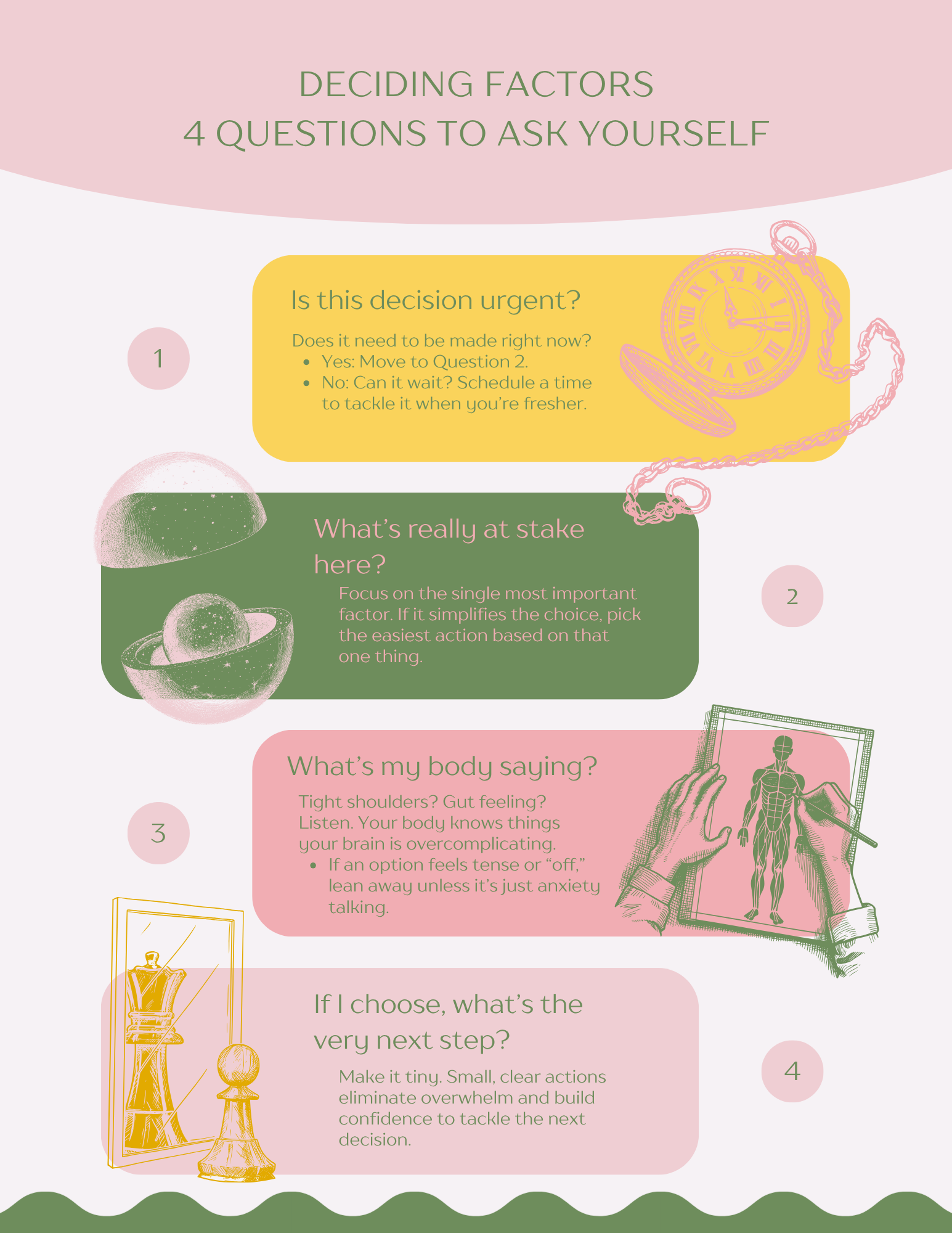
Click the image to download the Decision Fatigue Rescue Guide!
-
People-Pleasing & Boundaries
For the responsible one who carries everyone else's emotional load.
Explore the patterns that make saying no difficult, practice boundaries, and reconnect with your own needs.
-
Anxiety & Stress
For the capable adult who looks put-together but feels overwhelmed inside.
Understand your stress responses and explore new ways to navigate worry and uncertainty.
-
Inner Child Healing
For the adult whose earlier experiences may still shape how they relate to themselves and others.
Explore old patterns with curiosity and care while developing new ways of responding in the present.
-
Overthinking & Decision Fatigue
For the visionary who cannot shut off the mental tabs.
We help your brain slow down, trust itself, and make decisions without spiraling. -
Burnout & Perfectionism
For the person who's been holding it all together for so long they've forgotten what resting feels like.
We explore the pressure to get everything right, make room for your own limits, and build a more sustainable way of living.
-
Neurodivergent Adult Therapy
For the brain that doesn't always follow the expected script and the person who's tired of trying to make it.
We explore your unique needs, overwhelm, masking, and everyday challenges so you can find approaches that work with your brain, not against it.