
The Congruent Soul Framework
A more honest way to understand yourself, your relationships, and the world around you.
What if making a decision wasn't about finding the perfect answer, keeping everyone happy, or convincing yourself you shouldn't feel the way you do?
What if it started with considering the whole picture?
The Congruent Soul Framework is a way of understanding your experiences and making intentional choices by considering three interconnected elements: Self, Other, and Context.
It's grounded in one core idea: living congruently means doing your best to align your thoughts, feelings, and actions with your core values while considering other people and the circumstances you're navigating.
Not perfectly. Not without discomfort. And not by abandoning yourself to keep everything else running smoothly.
Just more honestly, one decision at a time.

The Three Elements of the Framework
Our experiences don't happen in isolation. How we feel, how we respond, and the choices available to us are influenced by our internal experiences, our relationships, and the circumstances we're navigating.
The Congruent Soul Framework invites you to consider three interconnected elements to help you understand what's happening and decide how you want to respond.
Self
What's happening within me?
Self includes your thoughts, feelings, needs, values, beliefs, bodily experiences, and actions.
It's about learning to recognize your own experience instead of immediately judging it, explaining it away, or pushing it aside to accommodate everyone else.
What am I feeling, and what might I need?
What matters to me in this situation?
Am I responding in a way that reflects my values, or am I acting out of fear, habit, or expectation?
Sometimes reconnecting with yourself means recognizing a need you've been ignoring. Sometimes it means acknowledging a feeling you've been trying to think your way out of. And sometimes it means realizing you don't actually know what you want yet.
That's okay, too. You can start there.
Other
What do I understand about the other person?
Other considers what you know about other people's experiences through what they communicate and do, while recognizing that you can't know everything happening inside someone else's head.
What has this person actually communicated?
What am I assuming they think or feel?
Am I taking responsibility for something that belongs to them?
Can I consider their experience without dismissing my own?
This element is especially helpful when people-pleasing, conflict avoidance, or fear of disappointing others starts making decisions for you.
You can care about someone without agreeing with them. You can consider their feelings without making yourself responsible for managing them. And you can recognize that someone is disappointed without automatically assuming you've done something wrong.
Understanding another person's perspective doesn't mean you have to prioritize it over your own.
Context
What else is influencing this situation?
Context considers the circumstances and environment shaping what's happening for everyone involved.
This might include your relationships, family history, culture, identity, responsibilities, resources, stress levels, power dynamics, and the expectations surrounding you.
What else is influencing this situation?
What is realistically possible given my current capacity?
What is within my control, and what might need to change outside of me?
Sometimes the problem isn't that you need better coping skills. Sometimes you're exhausted because you're carrying too much. Sometimes the expectations placed on you are unreasonable. Sometimes the relationship or environment itself needs to change.
Context helps you recognize the difference between something you can work on internally and something that requires a different response to the circumstances around you.
Because not everything is yours to fix.
Want to Explore These Ideas Further?
Sometimes a little perspective can help you see a familiar pattern in a new way.
On the Congruent Soul Therapy blog, I share reflections, practical tools, and deeper dives into the things we explore here, from overthinking and people-pleasing to boundaries, burnout, relationships, and learning to trust yourself.
If something here resonated with you, there's more to explore.
How the Three Work Together
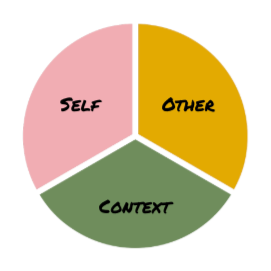
Self, Other, and Context aren't three separate boxes to check before making a decision. They're interconnected perspectives that help you understand the bigger picture.
Let's say a friend asks you for a favor. You're already exhausted, but before you've even thought about it, you've said yes.
Now you're overwhelmed, a little resentful, and wondering why you keep doing this.
Sound familiar?
Self: You notice your exhaustion, your hesitation, and the anxiety that comes with the possibility of saying no.
Other: You consider what your friend actually asked for, what they've communicated, and whether you're assuming they'll be upset if you decline.
Context: You recognize that you've had a demanding week, your capacity is limited, and the request may not be as urgent as it initially felt.
Your choice: You pause long enough to consider what response reflects your values, your capacity, and the reality of the situation.
Maybe you say yes because helping matters to you and you genuinely have the capacity.
Maybe you say no because you need rest.
Maybe you offer a different kind of support.
There's no single correct answer. The point is to create room for a response that you choose intentionally rather than one that happens automatically because it's familiar, comfortable for someone else, or less likely to create conflict.
That's what it looks like to consider the whole picture.
What Does Living Congruently Actually Mean?
Living congruently doesn't mean you'll always feel confident about your decisions or that your thoughts, feelings, and actions will always line up perfectly.
You're a human being. Sometimes you'll feel anxious about a decision that matters to you. Sometimes you'll care about two things that seem to conflict. Sometimes you'll make a choice that makes sense in the moment and realize later that you'd approach it differently.
Congruency isn't about eliminating those moments.
It's about learning to recognize what's happening, consider what matters to you, and make the most intentional choice you can with the information and resources available to you.
Sometimes that means setting a boundary.
Sometimes it means reconsidering an assumption.
Sometimes it means acknowledging your impact on someone else, taking responsibility, and making a repair.
And sometimes it means recognizing that you have very little control over a situation and deciding where your energy is best spent.
The goal isn't to make every decision feel good. It's to make decisions with greater awareness of yourself, other people, and the circumstances you're navigating.
You can honor your needs without disregarding someone else's. You can care about someone without abandoning yourself. And you can accept reality without assuming you have no choices.
That's the practice of living more congruently.
Moving From Understanding to Change
You can understand why you overthink, why you struggle with boundaries, or why you automatically put everyone else first and still find yourself doing those things.
Insight matters. But knowing why a pattern developed doesn't always change what happens when you're overwhelmed, anxious, or caught in a familiar situation.
In therapy, we work on creating more room between what happens and how you respond.
That might mean noticing your reactions as they happen, exploring what those reactions may be protecting, considering Self, Other, and Context, and practicing a different response when one feels appropriate.
It's not about getting rid of every uncomfortable feeling or forcing yourself to respond perfectly.
It's about building flexibility, learning from experience, and discovering that you may have more options than your familiar patterns have led you to believe.
And yes, sometimes you'll recognize the pattern after you've already done the thing.
That still counts as awareness. You can work with that, too.
How the Framework Informs My Approach to Therapy
The Congruent Soul Framework reflects how I think about the work we do together. My approach is relational, experiential, and systems-aware, grounded in the belief that your patterns make sense in the context of your life.
We won't just talk about what's happening in your head. We'll explore how your experiences show up in your body, your relationships, your decisions, and your everyday life.
Depending on what brings you to therapy, we may explore anxiety and overthinking, people-pleasing and boundaries, emotional exhaustion, identity, self-trust, or recurring relationship patterns.
The framework gives us a way to consider the bigger picture, but your experiences, needs, goals, and circumstances guide our work.
It's not a rigid formula, and you don't need to learn a model before you start therapy.
You just need room to be curious about yourself and open to exploring what might be possible.

A Few Questions to Take With You
You don't need to be in therapy to begin using these ideas. The next time you feel stuck, overwhelmed, or caught in a familiar pattern, try asking yourself:
Self: What am I experiencing, and what matters to me here?
Other: What do I actually know about the other person's experience, and what might I be assuming?
Context: What circumstances, expectations, or limitations are influencing this situation?
My next step: Given the whole picture, what response feels most consistent with my values and what is realistically possible right now?
You don't have to answer every question every time. Sometimes one is enough to help you pause and see a situation a little differently.
Take what resonates. Leave the rest. Come back to it when you need it.
A More Congruent Way of Living
You don't have to become a different person to create meaningful change.
You can learn to understand yourself without turning every experience into something you need to analyze. You can care about other people without disappearing into their needs. You can acknowledge the realities of your circumstances without assuming you have no choices.
And you can make a decision that feels right for you without needing a guarantee that everyone will understand it.
Living more congruently isn't about reaching a place where you never struggle, overthink, or fall into familiar patterns again.
It's about building a more honest relationship with yourself, becoming more intentional in how you relate to others, and recognizing the possibilities available within the life you're actually living.
Less autopilot. Less self-abandonment. More intentional living.
Ready to Explore What This Could Look Like for You?
You don't need to know exactly what you need or have a complete plan before starting therapy.
My free 15-minute Vibe Check is a chance to meet, ask questions, and see whether working together feels like a good fit.
No pressure to commit. Just a starting point.
Not Ready for Therapy? That's Okay.
You don't have to have everything figured out, and you don't have to be ready to start therapy to begin exploring what matters to you.
The Congruent Soul Therapy blog is a space for thoughtful reflections, practical resources, and honest conversations about being human, understanding your patterns, and finding a more congruent way forward.
Take what resonates. Leave the rest. Come back whenever you need to.